Is Bologna, Italy, worth visiting? A travel advisor's Emilia-Romagna guide
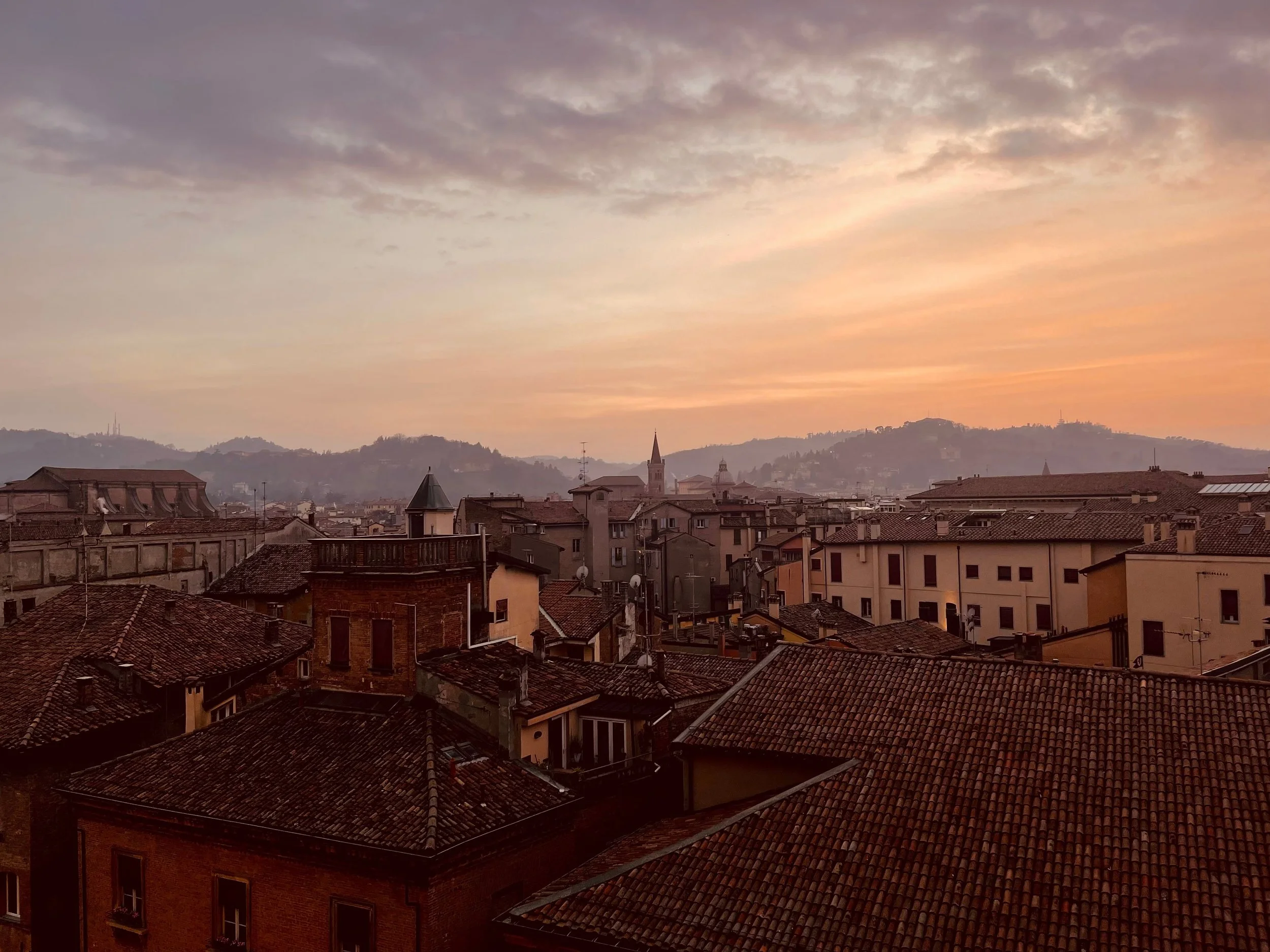
For food-loving travelers, Italy's Emilia-Romagna region and its capital, Bologna, have become one of the best places for food tourism in Europe, on par with major cities in Italy like Rome, Florence, and Venice. As a luxury travel advisor, I find myself sneaking this home of Parmigiano Reggiano, Parma ham and balsamic vinegar into my clients' Italy itineraries more often than not.
It's not just my clients who are interested in these cities: Emilia-Romagna welcomed a record 13.2 million visitors in 2025, up 7.8% from the year before. While more visitors frequent Rome, Naples, Venice, and other major cities and parts of Italy, Emilia-Romagna is catching attention.
I spent five nights exploring Bologna, Parma and Modena in March 2025. What I loved most was going behind the scenes: seeing how their iconic culinary products are made and meeting the families who pour their heart into these traditions. Many of these businesses are still family-run and are passionate about sharing their traditions with visitors. While visiting a balsamic producer, I learned that after at least twelve years of aging, the family that made the vinegar isn't allowed to bottle it. Expert tasters smell it, taste it, and rate it blind, and only if it passes does a consortium bottle it.
As a food-focused traveler, I craft my trips around experiences like these. I come home not only with a suitcase full of delicious souvenirs, but with knowledge and memories that enhance the flavors, because I know the stories behind them.
If you enjoy that kind of full, 360-degree culinary experience, keep reading to find out why I recommend a minimum of three nights in Emilia-Romagna instead of a day trip from Florence, and how I'd craft your journey as a luxury travel advisor.
Table of Contents
Bologna, Parma & Modena, compared
Bologna, Parma and Modena are the heart of the Emilia-Romagna region, yet each is distinct in its own way. Though they're just a short train ride apart, each city has its own personality and its own influence on Italy's food scene.
I explored all three with local guides, and while every one of them is charming, they aren't equal when your time is limited. I recommend allotting at least three nights in this region so you have time to explore all of these towns. But if you can only choose one, I'd recommend Bologna for its rich blend of history and food tradition, plus how easy it is to reach. Parma comes second for its art, theater and famous ham, and Modena third, unless you're a balsamic vinegar or Ferrari fan, in which case I'd put it first. Here's what makes each one worth your time, and how I decide which to prioritize for my clients.
Bologna, for history and food with fewer crowds
Bologna is the capital of Emilia-Romagna, and if you only have time for one city in the region, this is where I'd start. Centuries of history and some of Italy's most beloved food traditions meet in its compact city center, with far fewer crowds than you'll find in cities like Florence and Rome.
Bologna is home to the oldest university in the Western world, founded in 1088, and you can step inside its history. Some of the historical sites I enjoyed exploring were:
The Archiginnasio. Completed in 1563 to bring the university's scattered schools under one roof, this palace is where students attended lectures until 1803. Today, it's the city's library. Inside is a wood-paneled medical theater built in 1637 where medical students watched anatomy lessons.
The Basilica di San Petronio. Impressive and unique, and worth visiting with a guide who can share the details you'd otherwise walk past, such as the 67-meter meridian line that astronomer Giovanni Domenico Cassini set into its floor in 1655, which still marks the sun's position at noon each day.
History in Bologna isn't just about what you can see, but also what you can taste. Nicknamed "La Grassa" (the fat one), the city is famous for its fresh egg pasta tradition, from tagliatelle al ragù to tortellini, as well as mortadella, which originated here. You can explore it through a walking food tour of the historic center, or a cooking class where you learn to roll fresh pasta yourself, an easy way to balance a morning of sightseeing.
Is Bologna worth visiting?
In 2025, Bologna welcomed more than two million visitors (up from about 1.84 million in 2024), a sign of growing interest in Italy's historically lesser-visited cities and regions. With rich history, a deep culinary culture, and experiences that match those of Rome and Italy's other popular destinations, Bologna is a city I never hesitate to recommend to my clients. Whether they've been to Italy before or not, it's just as intriguing for history-loving, food-focused travelers looking to get beyond the typical tourist trail.
Parma, for art, theater and Parma ham
Parma was my next favorite city in Emilia-Romagna. The Palazzo della Pilotta is the highlight, most especially its theater and the story behind it (my partner guides will tell you all about it on a tour!).
For food tourism, Parma is also the best place to go behind the scenes with the region's producers. Parma ham and Parmigiano Reggiano are both protected DOP products made in and around the city, and many are still family-run operations.
Just like a lot of wine, these products are highly regulated. Only the official inspectors can approve the quality and give producers permission to sell under the protected name.
Know before you go: Every wheel of Parmigiano Reggiano is inspected at around 12 months to make sure it's top quality. If it passes, it's fire-branded with the official mark. If something isn't right, the markings are removed, and it can't be sold as Parmigiano Reggiano.

Modena, for balsamic, Bottura and Ferrari
Modena is where two of Italy's great passions, food and fast cars, come together. Home to traditional balsamic vinegar, Massimo Bottura's three-Michelin-star kitchen and the legacy of Ferrari, it's the city I build a trip around for travelers who already know exactly what they love.
Balsamic vinegar is Modena's most famous export, and the traditional kind is nothing like what you'll find on grocery store shelves. Aceto Balsamico Tradizionale di Modena ages for at least 12 years in a series of wooden barrels, often in the attics of family homes. Then it faces a blind tasting by expert judges, and only vinegar that passes is bottled by the consortium rather than the producer. Visiting an acetaia is better than reading about it, though...and will ruin all other balsamic vinegar for you!
This is also where Italy's sports cars are made. Ferrari has two museums here: the Museo Enzo Ferrari in Modena and the Museo Ferrari in Maranello, about 20 kilometers away. Even if you're not especially interested in Ferrari's history, it's still interesting to see the cars and how they evolved over the last century. If you want to go a step further, local operators around Maranello offer Ferrari test drives.
Modena is also home to Massimo Bottura's Osteria Francescana, a three-Michelin-star restaurant that has twice topped The World's 50 Best Restaurants list. Tables are released online about three months ahead and disappear quickly. For something more relaxed, try his bistro, Franceschetta58. My team can help request reservations at both, though nothing is ever guaranteed at restaurants this sought-after.
How to fit Emilia-Romagna into your trip to Italy
Emilia-Romagna fits into most Italy itineraries with very little effort. Bologna, the region's main gateway, connects easily by train from Venice, Milan, and Florence, and its airport is bigger than many travelers realize. It handled 11.1 million passengers in 2025, making it Italy's seventh-busiest. When I flew home, flying out of Bologna was the same as flying out of Florence.
I plan this region one of two ways:
As part of a wider Italy trip. Give the region three nights between the cities you already have planned, arriving and leaving by train.
As the focal point. Base yourself at a countryside hotel and spend your days exploring Bologna, Parma and Modena, the way I did over five nights. This works well for travelers who've done the classic Italy route and want to go deeper in one place.
Why a day trip from Florence isn't enough
A lot of travelers see Emilia-Romagna as a day trip from Florence or Milan. Personally, I think that's too fast. With just a day, you are limited to one, maybe two, cities. You'll probably only see one producer making their food product, and you might only have one tasting.
If a day trip is all your itinerary allows, I can help you choose between your options based on what you want to experience.
Otherwise, I'd recommend what I tell all my clients: make your visit to this region three nights minimum. It's enough time to see a producer or two, take a cooking class or food tour, and explore Bologna and Parma properly, without rushing from one booking to the next.
Who Emilia-Romagna is right for
If you've already done Rome, Venice and Florence, Emilia-Romagna is where a trip to Italy feels like another layer deeper. Here, the most memorable experiences happen behind closed doors: a family's balsamic attic, a cheesemaker's aging room outside Parma, a guide who brings Bologna's historic university stories to life. You could find your way to Bologna on your own. Getting you inside those doors is where I come in.
Food is the draw, but it doesn't have to be the whole story. Bologna and Parma are rich enough in art and history to give your days real variety, and car lovers will find Ferrari's home turf in Modena and Maranello.
Where to stay in Emilia-Romagna?
For some travelers, the hotel is seen as a place to sleep. Maybe, at best, somewhere to enjoy breakfast or unwind in the evening with a glass of wine before going out to dinner. But for many of my clients, the hotel is as much a focal point as any experience.
In Emilia-Romagna, a countryside hotel lets you spend your days in the cities eating, exploring, and learning, then return each evening to space and calm. The following three properties offer exactly that kind of retreat, and each is an experience in and of itself.
Relais Roncolo 1888, my favorite
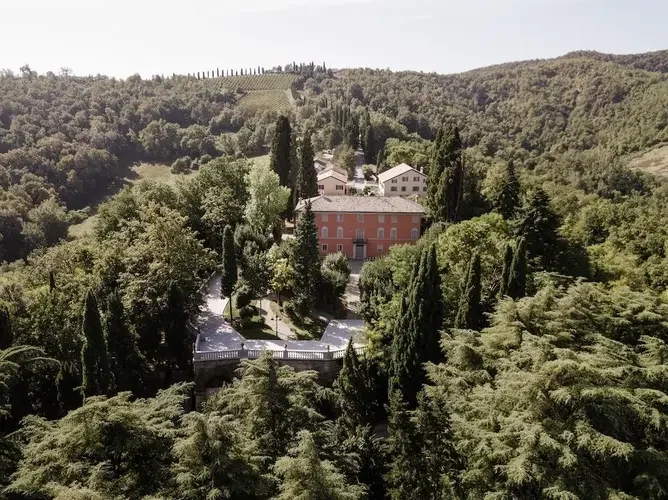
My favorite hotel in the region is Relais Roncolo 1888, an intimate hilltop borgo on the organic Venturini Baldini wine estate near Reggio Emilia. If you want to wake up inside Emilia-Romagna's food culture, this is the place. You can taste the estate's own sparkling wines and Lambrusco, sample traditional balsamic from its Acetaia di Canossa, roll fresh pasta in a cooking class, or explore the vineyards on horseback. Evenings end at the property's restaurant, La Limonaia, set in the estate's historic greenhouse, where the menu is modern Emilian cooking built on local ingredients. With Parma about 40 minutes away by car and Modena about 50, it's an ideal base for exploring the region.
Casa Maria Luigia, for food lovers
If the point of your trip is flavor, staying at world-celebrated chef Massimo Bottura's inn is the definition of the hotel as the experience. Casa Maria Luigia is the 18th-century country house he and his wife and partner, Lara Gilmore, opened just outside Modena. Every room is different, filled with art and design pieces the couple chose for it, breakfast is a family-style spread shared in the house's country kitchen, and a music room is lined with thousands of vinyl records. You never have to leave the estate for dinner, with two restaurants on site, both led by Bottura's longtime protégé, chef Jessica Rosval:
Francescana at Maria Luigia serves a nine-course tasting menu of Bottura's most iconic dishes, with each course introduced by the story of where it came from.
Al Gatto Verde is set in a former stable on the grounds, where a relaxed ambiance is built around a crackling fire. Explore the flavors of local ingredients cooked over the flames, and order à la carte or settle in for the tasting menu.
Palazzo di Varignana, for space and wellness
If you want your days in the cities balanced by time to slow down, Palazzo di Varignana is the place to do it. Set in the hills about 30 minutes from Bologna, the resort is spread across a restored palazzo and old farmhouses on a working estate, with olive groves, vineyards and gardens that supply its five restaurants. You can walk the trails through the groves, taste the estate's award-winning olive oil, and spend afternoons at the Varsana SPA, with seven outdoor pools and treatments made from the farm's own olive oil, grapes and saffron. For families or friends traveling together, private villas on the estate, many with their own infinity pool, offer even more space.
Travel agent or travel advisor? Why it matters for a trip to Emilia-Romagna
One of the most common questions I get asked about my profession is, "What's the difference between a travel agent and a travel advisor?" Believe it or not, even though these terms can be used interchangeably, they actually signal different services.
Travel agents book travel as "products," like a travel package to Italy with a set route and set hotels. The same service for every traveler.
A travel advisor usually offers a much more personalized, tailored experience. Advisors like myself start with the client, not the product. I ask what you want to taste, learn and feel, then build the trip around it.
On a trip to Emilia-Romagna, the difference between booking with a travel agent versus a travel advisor is evident. A travel agent will most likely sell you a day-trip package from Florence: one stop at a Parmigiano Reggiano producer, one tasting, and a train back in time for dinner. It checks the box, and it's the same day every traveler on that tour gets.
As a travel advisor, before I book anything here, I ask clients what matters most, then build the experience around that. Where you stay, which cities you visit, and what fills your time is shaped around you.
Final thoughts
Emilia-Romagna is a region best experienced slowly. With at least three nights, you'll have time to understand why its foods matter so much, meet the families who make them, and explore some of Italy's most historic cities without feeling rushed.
Whether you fold it into a wider trip or make it the heart of one, I'd love to help you plan it. Tell me where you want to go, or how you want to feel, and I'll show you what's possible. Book a discovery call to get started.
Frequently asked questions
Where should I go in Italy if I've already been to Rome, Venice and Florence?
As a luxury travel advisor, I recommend Emilia-Romagna to travelers who have already visited Rome, Venice and Florence. Its cities, Bologna, Parma and Modena, are beautiful and historic, with far fewer crowds, and the region is home to Parmigiano Reggiano, Parma ham and traditional balsamic vinegar, making it one of the best places for food tourism in Europe. Emilia-Romagna is also easy to reach by train from Venice, Milan and Florence, so it fits easily into a return trip to Italy.
Should you fly into Florence or Bologna?
Bologna's Guglielmo Marconi Airport is a strong alternative to Florence for flights in and out of Emilia-Romagna. It's Italy's seventh-busiest airport, handling 11.1 million passengers in 2025, and in my experience as a travel advisor, connections home to the US from Bologna are often just as convenient as those from Florence. If Bologna or Emilia-Romagna is the last stop on your Italy trip, flying out of Bologna also saves you the train ride back to Florence.
How many days do you need in Bologna?
Plan on at least three nights in Bologna and the surrounding Emilia-Romagna region. That gives you time for Bologna, a second city like Parma, and a visit to a Parmigiano Reggiano, Parma ham or balsamic vinegar producer or a cooking class without rushing. If you only have one day, spend it in Bologna itself. To explore Bologna, Parma and Modena in depth, plan on five nights.
When is the best time to visit Bologna?
For Italy in general, peak season (June through August) isn't recommended if you want to avoid summer heat and crowds. For that reason, the best time to visit Bologna is usually during the shoulder seasons, April and May or September and October, when the weather is milder and the cities are calmer. As a luxury travel advisor, I visited Bologna in March, and while it was chilly and rainy, that didn't get in the way of my culinary experiences. When planning any trip, it's best to talk to your travel advisor about what you want to see, do and experience to determine the right time to go.
Is it better to book hotels in Emilia-Romagna through a travel advisor, directly or on Booking.com?
Booking a luxury hotel in Emilia-Romagna through a Virtuoso travel advisor typically adds benefits you won't get by booking directly with the hotel or through a site like Booking.com. At Relais Roncolo 1888, for example, guests who book through me in 2026 receive an upgrade on arrival and early check-in or late check-out (both subject to availability), plus a $100 USD hotel credit to use during their stay, on top of the daily breakfast for two that's already included in the rate. As a luxury travel advisor, I also handle the details around your booking, from special requests to the restaurant reservations and experiences that shape the rest of your trip.
Whitney Shindelar

Undiscovered Sunsets was a long time in the making, even if I myself didn’t realize it. During my time at the University of Northern Iowa, I studied abroad in New Zealand. Upon graduating, I bought a one-way ticket to France, lived with a French family and studied with classmates from Turkey, China, Russia, Germany, Italy, and everywhere in between. In 2010 I began teaching English as a foreign language. This job quickly took me to China, where English teachers were in high demand and within three years, I began working in a 5-star hotel, speaking Mandarin throughout most of my day. In total, I lived abroad for 7 years.
I consider Undiscovered Sunsets to be the perfect mélange of my personal experience traveling the world and my professional experience working in the hospitality industry.
I look forward to designing your next adventure!